

As a business grows, hiring mistakes become increasingly expensive. The wrong employee can slow down your team, consume management time, and negatively impact customer relationships. That’s why successful hiring isn’t about finding a “good person” — it’s about finding someone who can solve the specific challenges your business faces.
Here are seven practical ways to hire employees who will help your company grow.
1. Define the role before you start hiring
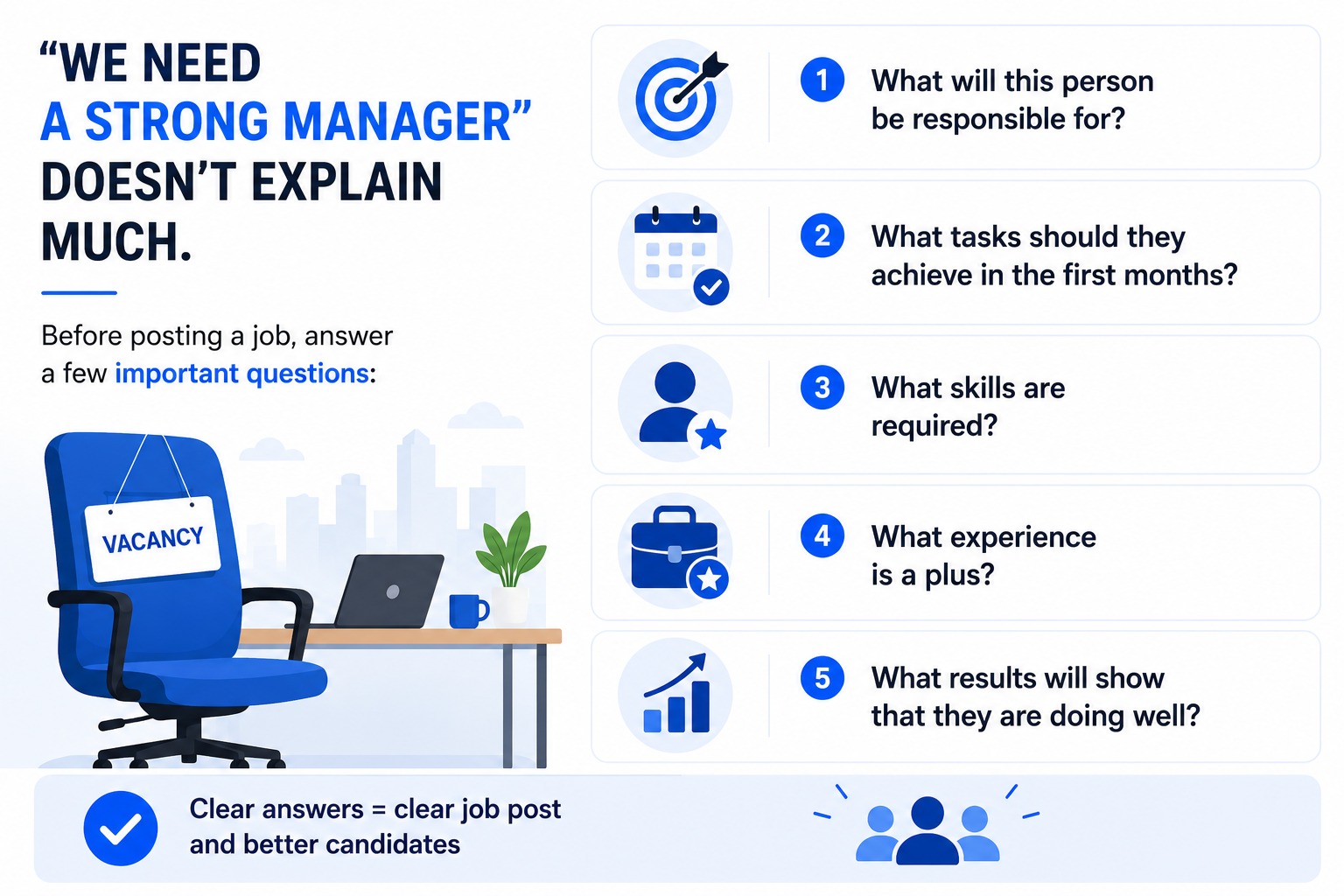
A job title alone isn’t enough. Before posting a vacancy, clearly identify:
- the employee’s main responsibilities;
- the goals they should achieve during their first few months;
- the essential skills and qualifications;
- the experience that would be an advantage;
- how their performance will be measured.
A detailed job description attracts stronger candidates and reduces the number of unsuitable applications.
2. Look beyond the resume
Technical skills are important, but they aren’t the whole picture. Someone may have an impressive resume yet struggle to communicate, adapt to change, or work effectively within a team.
During interviews, pay attention to how candidates explain their experience, solve problems, respond to feedback, and discuss past challenges. For growing businesses, qualities such as initiative, flexibility, and accountability are often just as valuable as technical expertise.
3. Use multiple recruitment channels
Limiting your search to a single job board means missing qualified candidates. To reach a wider talent pool, combine several recruitment methods, including:
- online job platforms;
- professional networking sites;
- social media;
- employee referrals;
- recruitment agencies.
Different candidates search for opportunities in different ways, so using multiple channels improves your chances of finding the right person faster.
4. Conduct structured interviews
Casual conversations rarely provide enough information to compare applicants objectively. Instead, prepare a consistent set of questions for every candidate.

Ask about real situations they’ve handled, the actions they took, the challenges they faced, and the results they achieved. Depending on the role, you may also include a practical assignment or a case study.
Using the same evaluation criteria for every interview leads to fairer and more confident hiring decisions.
5. Verify references and background information
For positions involving financial responsibility, customer relationships, or leadership, checking references is a smart investment.
Confirm previous employment, responsibilities, achievements, and the reason for leaving. When necessary, verify education, certifications, or professional credentials.
A simple background check can prevent costly hiring mistakes later.
6. Offer clear and competitive conditions
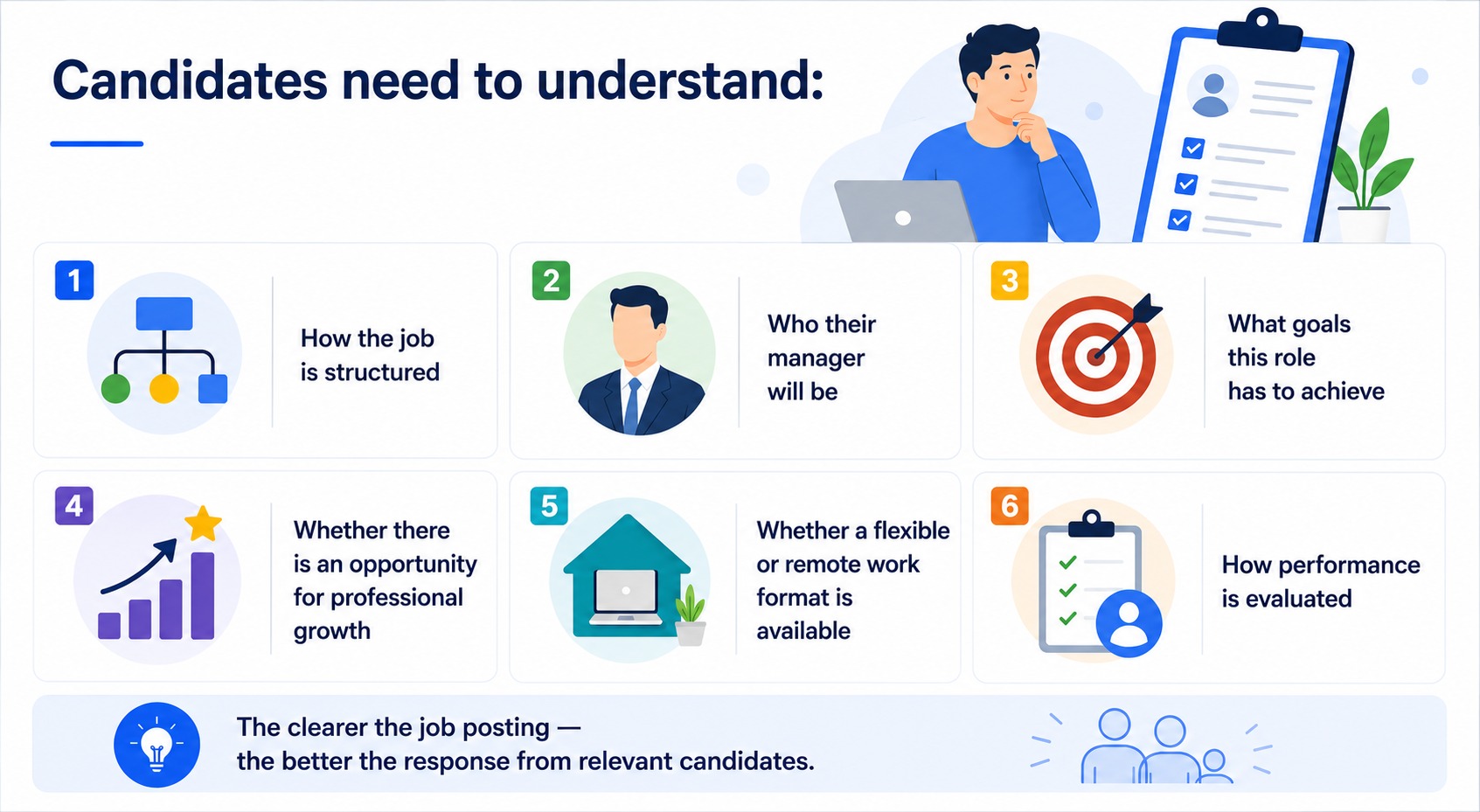
Top candidates often receive several job offers. While salary is important, it’s rarely the only deciding factor.
Candidates also want to know:
- what their daily responsibilities will be;
- who they will report to;
- how success is measured;
- whether there are career development opportunities;
- if flexible or remote work is available.
Be honest about what your company can offer. Clear expectations help attract employees who are likely to stay and grow with the business.
7. Consider working with a recruitment agency
Hiring internally isn’t always the fastest or most effective option. If you’re recruiting for a hard-to-fill position, need to hire quickly, or simply don’t have time to review hundreds of applications, a recruitment agency can make the process much easier.
Experienced recruiters provide access to qualified candidates, conduct initial screening, and offer valuable insights into current hiring trends and salary expectations.
The final hiring decision should always remain with your company, but professional support can significantly reduce the time and effort involved.
Hiring the right employees starts long before the first interview. The better you understand your business needs, the easier it becomes to find people who won’t just fill a vacancy — they’ll help your company continue to grow.