

Buying vehicles overseas can give businesses more choice, better pricing, and access to models that are hard to find locally. Research might start with dealer inventories, regional listings, or a market-specific guide, like the one on auto.yugatech.com covering car purchases in Qatar. But finding the right vehicle is one thing. Getting it across borders is another.
From checking suppliers and preparing paperwork to arranging shipping, clearing customs, and handling final delivery, there’s plenty to get right. A small oversight can mean extra costs or weeks of delays. Here’s how international vehicle export works and what buyers should know before committing to a shipment.
What is international vehicle export?
International vehicle export means purchasing vehicles in one country and shipping them to another. It’s common among dealerships, fleet operators, rental companies, NGOs, and government organizations.
Businesses may export passenger cars, commercial trucks, electric vehicles, or specialist vehicles. The process depends on where the vehicles come from, where they’re going, and whether they meet local regulations.
Step 1: Define your vehicle requirements
Start with what your business actually needs. Consider vehicle type, quantity, budget, intended use, and destination.
For example, a logistics company may need commercial vans, while a rental operator might want fuel-efficient passenger cars.
Check details such as engine type, emissions, safety features, and left-hand or right-hand drive. Getting these right early can save expensive changes later.
GMTI helps B2B buyers find vehicles that match their needs across international markets.
Step 2: Find and verify suppliers
Once you know what you’re looking for, it’s time to source the vehicles.
Start by getting a feel for the local market. You might compare dealer listings, contact established sellers, or read a detailed guide on how to buy a car in Qatar if you’re considering that market.
Reliable suppliers should provide accurate specifications, ownership records, and clear information about vehicle condition. For used cars, checking the vehicle identification number (VIN), service history, and inspection reports is especially useful.
A low purchase price means little if the vehicle arrives with problems or cannot be registered.
GMTI works with international supply networks to help businesses source new and pre-owned vehicles.
Step 3: Check export and import rules
Every country has its own vehicle import requirements. A car approved for one market may not meet the rules in another.
Before buying, check emission standards, safety requirements, vehicle age restrictions, duties, and any required import permits.
Some destinations also require inspections or conformity certificates.
These checks should happen before shipping. Otherwise, a vehicle could face delays, extra charges, or even refusal at the destination port.
Step 4: Prepare the documents
Paperwork can make or break an international vehicle shipment.
Depending on the countries involved, you’ll typically need:
- Commercial invoice and proof of ownership.
- Export declaration and shipping documents.
- Bill of lading.
- Certificate of origin, when required.
- Inspection or compliance certificates.
Vehicle details, especially VINs, must match across the documents.
It’s also worth agreeing on Incoterms, which define who handles transport costs, insurance arrangements, and delivery risks.
Step 5: Arrange international shipping
The best shipping method depends on your budget, destination, and vehicle type.
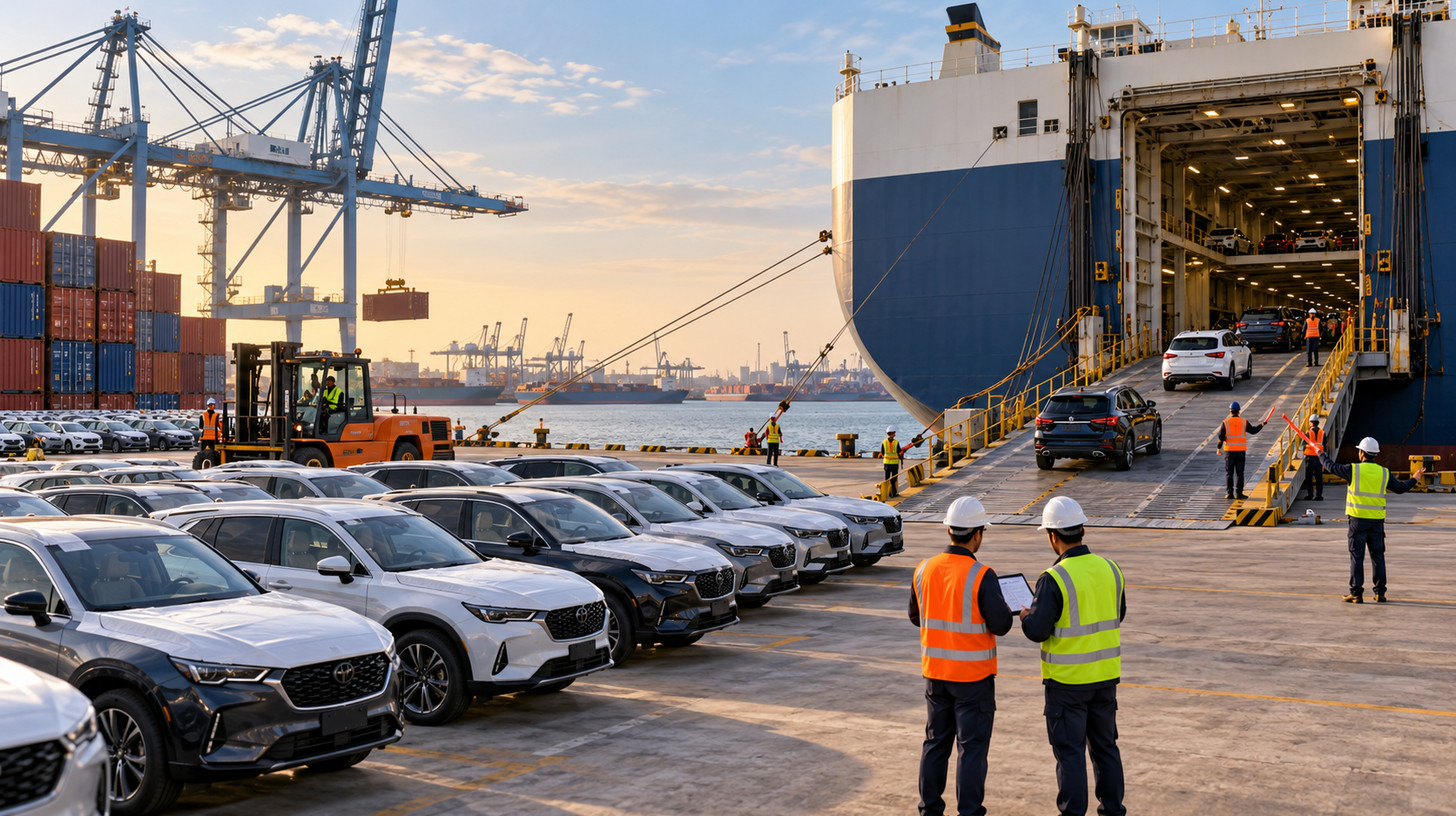
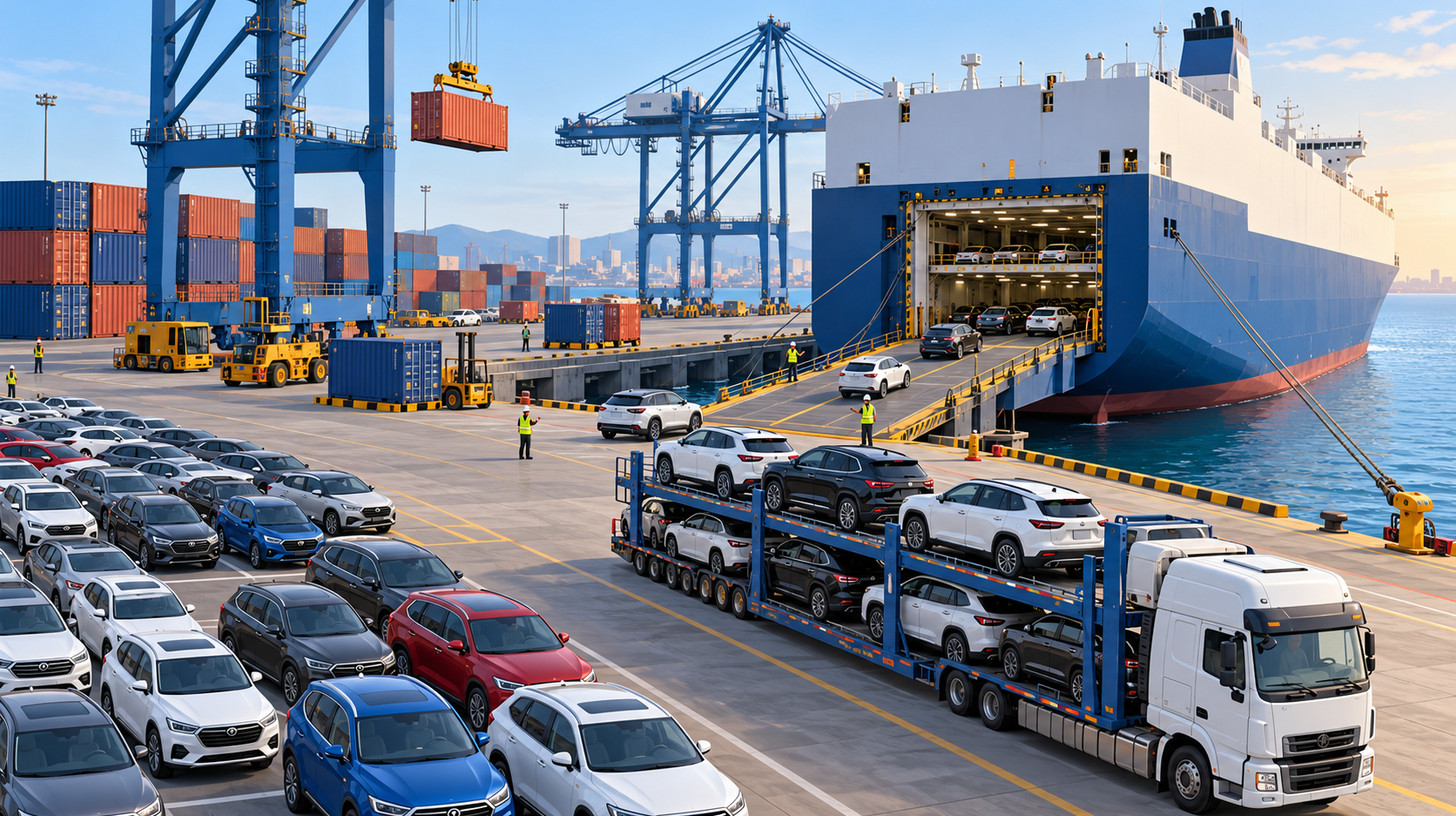
RoRo shipping: Vehicles are driven onto a specialised vessel. This is often a cost-effective option for standard cars, trucks, and larger fleets.
Container shipping: Vehicles travel inside shipping containers, offering more protection during transit. It’s popular for premium cars and specialist shipments.
Air freight: Faster but considerably more expensive. Usually chosen for urgent or high-value deliveries.
Remember to account for port handling, inland transport, marine insurance, and possible storage fees.
Step 6: Clear customs and arrange delivery
When the shipment arrives, customs authorities review the documents and assess applicable duties and taxes.
Depending on local rules, vehicles may also need inspections or approval before registration.
After clearance, they can be transported to the buyer’s facility, dealership, or fleet location.
Planning this final stage early helps prevent vehicles from sitting at the port while storage charges build up.
Why work with a vehicle export partner?
Managing suppliers, freight companies, and customs agents across countries takes time. It becomes even harder when you’re purchasing dozens or hundreds of vehicles.
An experienced export partner can help coordinate sourcing, paperwork, shipping, and delivery.
For fleet buyers, this means fewer separate contacts, clearer communication, and better control over the purchasing process.
How GMTI supports international vehicle export
GMTI (Global Motor Trade International) helps businesses source and export vehicles across international markets.
Its services cover vehicle sourcing, fleet procurement, commercial vehicles, OEM supply, and export logistics coordination.
Whether you’re expanding a rental fleet, buying commercial vehicles, or sourcing specialist units, GMTI helps connect the different stages of international procurement.
Planning an overseas vehicle purchase? GMTI can help you explore available options and coordinate the export process around your business needs.