

Social media gives small businesses a direct way to connect with customers, showcase products or services, and build trust over time.
Yet many business owners spend hours creating posts without seeing more followers, inquiries, or sales.
In most cases, the problem isn’t social media itself. It’s a few common mistakes that quietly limit results.
Posting inconsistently
Many businesses start with enthusiasm. They post regularly, share updates, and stay active. Then work gets busy, deadlines pile up, and social media is pushed aside.
Weeks — or even months — pass without a new post.
When potential customers visit an inactive profile, they may wonder whether the business is still operating.
You don’t need to post every day. For many small businesses, two or three quality posts a week are enough. What matters most is staying consistent.
A simple content calendar can make this much easier by helping you prepare ideas and content in advance.

Making every post a sales pitch
“Buy now.” “Book today.” “Limited-time offer.”
When every post is focused on selling, people quickly stop paying attention. Most users don’t follow businesses just to see advertisements.
Instead, show how your business works. Answer common customer questions. Share useful tips, customer stories, behind-the-scenes moments, or positive reviews.
Sales messages become far more effective when they’re surrounded by content that provides real value.
Posting without engaging
Social media is built for conversations, not one-way announcements.
If someone leaves a comment or sends a message and receives no reply, they’ll likely move on to a competitor who responds faster.
Reply to comments, answer direct messages, thank customers for feedback, and interact with other local businesses.
Even spending 10 to 15 minutes a day engaging with your audience can make your account feel more active and trustworthy.
Not understanding your audience
Some businesses create content that’s interesting to industry professionals instead of potential customers.
Your audience usually cares less about technical details and more about how your product or service solves their problem.
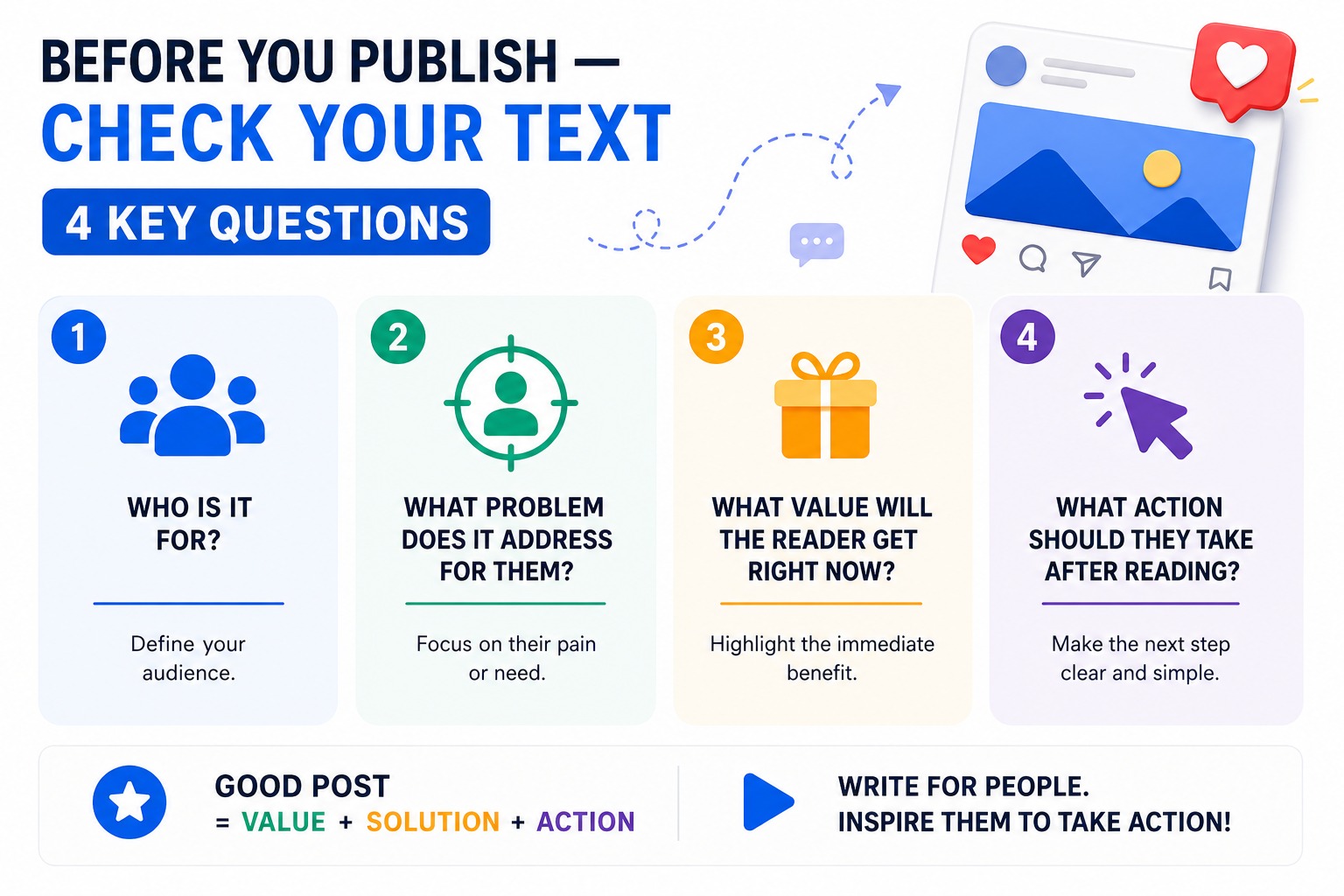
Before publishing a post, ask yourself:
- Who is this for?
- What problem does it address?
- What value will the reader get?
- What action should they take next?
If those questions don’t have clear answers, the content probably needs improvement.
Inconsistent branding
One day your posts are formal. The next day they’re playful. A week later they look like they belong to a completely different company.
This inconsistency makes your brand harder to recognize.
You don’t need an expensive design system. Consistent colors, readable fonts, quality images, and a clear tone of voice are enough to create familiarity over time.
People should recognize your content before they even notice your logo.
Trying to be everywhere
Many small businesses believe they need to be active on every platform.
In reality, managing Instagram, Facebook, TikTok, LinkedIn, and other networks at the same time often leads to burnout and lower-quality content.
It’s usually better to focus on one or two platforms where your target audience spends the most time.
Quality consistently beats quantity.
Expecting instant results
One successful post rarely transforms a business overnight.
People usually need multiple interactions with a brand before they decide to make a purchase. They want to see your expertise, read reviews, and become familiar with your business.
That’s why social media marketing requires patience.
Instead of focusing only on follower numbers, pay attention to comments, saves, messages, website visits, and repeat interactions. These indicators often reveal whether your audience is moving closer to becoming customers.
Social media works best when businesses post consistently, create content that helps their audience, and stay engaged after hitting the “Publish” button.
Don’t try to fix everything at once. Improve one area, make it part of your routine, then move on to the next. Small changes made consistently often produce the biggest long-term results.