
How to buy an established business
Entrepreneurs who don’t want to start a project from scratch often consider buying an established business — but how do you avoid hidden risks? The upside is that an existing business already has customers, employees, suppliers, and revenue. However, along with those assets, a new owner may also inherit debt and processes that are deeply tied to the previous owner. That’s why a buyer’s main goal is to assess whether the business can continue generating income after the change in ownership.
Where to start your search
Before browsing listings, you need to define your budget, industry, and how hands-on you want to be. A restaurant, an online store, and a manufacturing business each require different levels of experience, working capital, and personal involvement. Having clear criteria from the start helps you quickly rule out options that aren’t a good fit.
Before buying a business, you need to assess its actual profitability and how long it will take to recoup your investment. A high asking price doesn’t automatically mean a bad deal. A business with consistent demand, transparent financial records, and steady profits may be a better buy than a cheaper but problematic one. When running your numbers, strip out one-time windfalls and factor in expenses the seller may have underreported or left out of their pitch.

Reviewing financials and documents
A seller’s presentation creates a first impression, but the source documents tell the real story. You’ll want to cross-reference internal accounting records with bank statements, point-of-sale data, tax filings, and contracts. Pay close attention to seasonality — a few strong months don’t prove that a business is consistently profitable.
To figure out whether it’s better to buy the legal entity or just its individual assets, you need to weigh the risks of each approach. Buying a stake in the company lets you keep existing contracts in place, but it may also mean inheriting old debts and other liabilities.
Purchasing assets separately — such as equipment, inventory, the website, and lease rights — reduces that risk, but you’ll need to renegotiate agreements with vendors and partners from scratch.
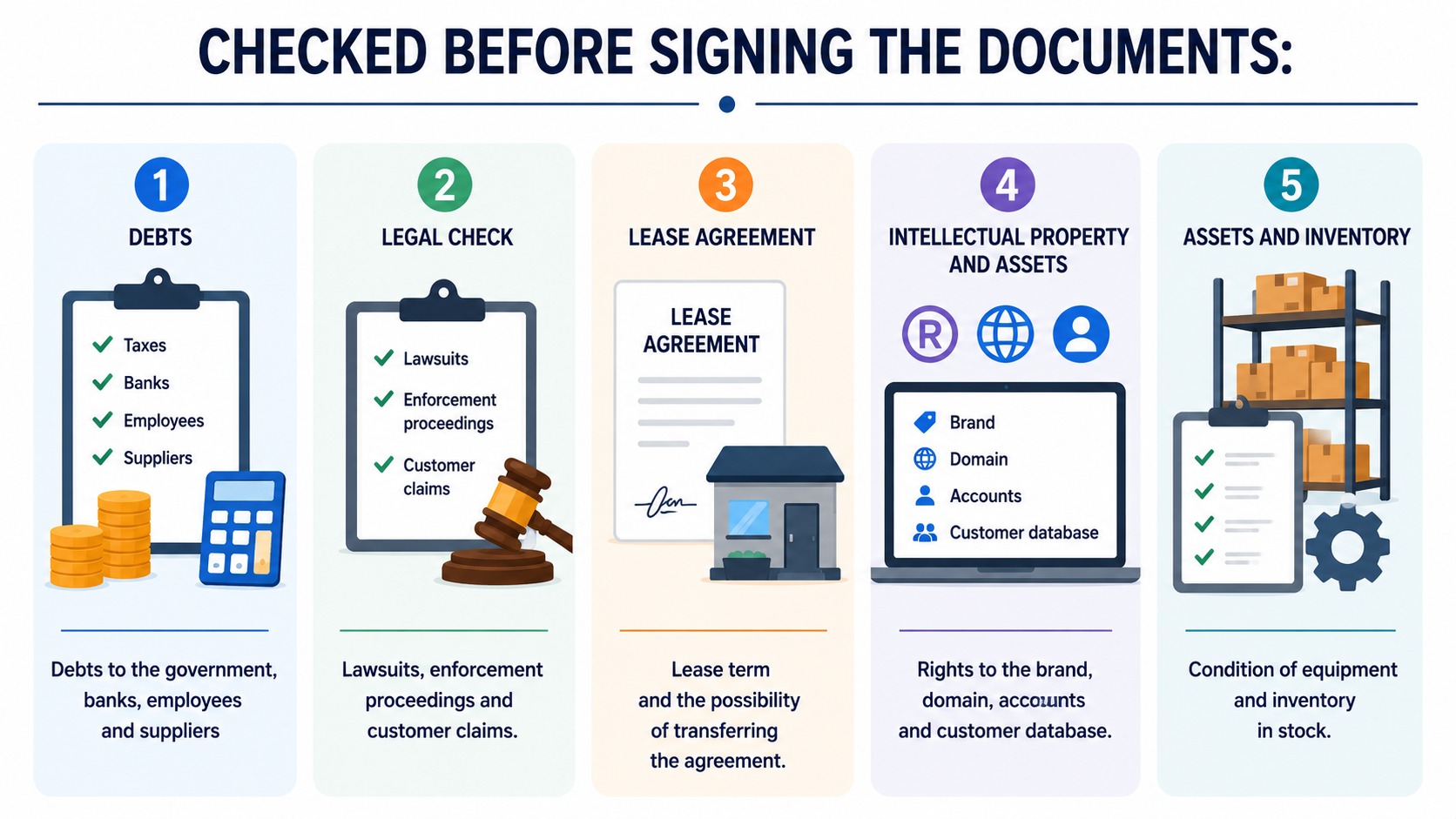
Before signing anything, make sure to review:
- Tax liabilities, bank debt, employee obligations, and amounts owed to suppliers.
- Pending lawsuits, enforcement actions, and customer complaints.
- The remaining lease term and whether it can be transferred.
- Ownership of the brand, domain, social media accounts, and customer database.
- The condition of equipment and inventory.
Compare everything you find against the asking price. Any debt, worn-out equipment, or risk of losing the lease should either lower the price — or be reason enough to walk away from the deal.
Owner dependency
When evaluating how to buy an established business the right way, it’s critical to understand the seller’s role in day-to-day operations. If they’re the one personally bringing in key clients, managing supplier relationships, and overseeing the finances, revenue could take a hit once they leave. Businesses where responsibilities are spread across a team — and operations don’t hinge on one person — are generally a safer bet.
You can get a feel for this during an on-site audit. Observe foot traffic or activity levels at different times of day, speak with managers, assess employee motivation, and ask about turnover. A conversation with the landlord and major partners will also reveal whether they’re willing to continue the relationship under new ownership.
Negotiations and handover
Understanding how to buy a business also means structuring payments wisely. Handing over the full amount before you’ve received the assets, access credentials, and documentation is risky. Consider tying part of the payment to conditions like lease renewal, inventory verification, or maintaining an agreed-upon revenue level during the transition period.
The purchase agreement should spell out:
- Everything included in the deal.
- The value of each asset.
- Payment terms and schedule.
- Liability for any undisclosed obligations.
You should also include a transition support period from the previous owner, a handover of key contacts, and a non-compete clause preventing them from opening a competing business nearby. Clear terms reduce the chance of disputes down the road.
In the early days, it’s usually best to hold off on changing the product mix, pricing, or team. The first few weeks are better spent monitoring cash flow, getting to know your employees, and observing customer behavior. A business acquisition pays off when your projections are backed by solid documentation and every risk is reflected in the price and the contract.